Field Note 02
Conduit Signals
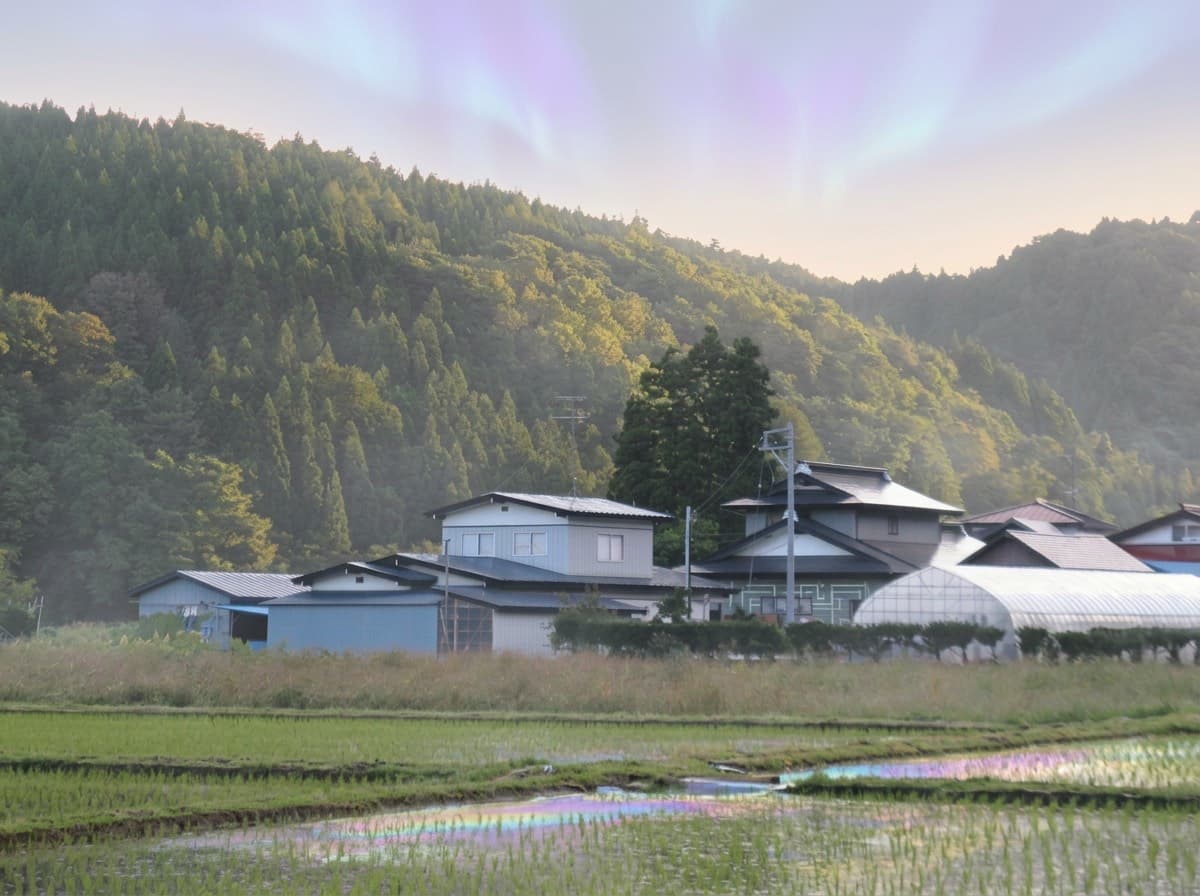
What to Notice: Atmosphere & Sensation
The folklore speaks in residue instead of announcements: static, heightened awareness, odd emotional shifts, seasonal disturbances, and the sense that perception is slightly ahead of the body. The conduit does not shout. It vibrates at the edge of ordinary weather.
Field Fact
Factual Ground
The factual layer is simpler: weather changes, seasonal variations, route fatigue, mountain light, and the altered perception that can come with long rural travel are all real conditions.
The tourism-facing material around Christ Park focuses on the legend, the associated museum, and the broader curiosity value of the site rather than any claim of measurable anomalies. That makes it usable as a factual reference point without forcing supernatural assertions into the sourced layer.
The most reliable baseline is verifiable visitor conditions: changing weather, shifts in seasonal atmosphere, and the practical experience of arriving in a quiet rural environment far from major urban density.
Editorial note: the phrase 'conduit signal' is site language, not a municipal category. Public-source claims stay in the factual layer; conduit language remains interpretive.
Site Context
Observed Site Conditions
Northern Aomori already creates a strong perceptual frame before the mythology is introduced. Long travel time, colder air, less visual clutter, and repeated open terrain can make subtle changes in light and mood feel more pronounced than they would in a dense city.
That does not prove anything occult. It does, however, provide a legitimate basis for discussing signal in psychological and atmospheric terms: the visitor's attention changes, the environment simplifies, and minor differences begin to register more intensely.
Handled carefully, this becomes one of the stronger conduit readings because it addresses perception directly without dressing up ordinary rural conditions as pseudo-science.
Conduit Reading
Conduit Reading
In canon terms, signal is not a lab measurement. It is the residue left when a place causes attention to reorganize itself. Static, heightened awareness, memory drift, and slight mood displacement are best framed here as readings rather than claims.
That distinction keeps the note in bounds. The facts describe where you are and what conditions tend to shape perception. The reading interprets why those conditions feel like low-level system output instead of generic travel fatigue.
Within this framework, the conduit remains an interpretive layer over recurring weather, distance, and visual repetition rather than an instrumental claim.
Field Fact
This note should eventually combine real local data, place-specific references, and directly attributable context from public sources.
Field Note
Interpretive language can stay strange, but it should read as canon or editorial theory, not as a literal municipal claim.
Reference Rule
Use official Shingo and Aomori sources firstSite Conditions
Topography, weather, distance from major hubs, and seasonal shifts are part of the note, not background decoration.
Canonical Read
Each field note should interpret the landscape as conduit behavior: residue, pattern, pressure, and threshold logic.
Target Depth
Each field note should eventually expand into an 800 to 1,600 word article with local references, images, and outbound links.
Sources
Continue
Free guide
Hachinohe Station to the tomb, on one page.
A bilingual PDF with the Shinkansen to Hachinohe, the drive into Shingo, and the limited bus connection. Confirm the email, and the guide is in the message that follows.