Christ Park in Shingo Village: What to Know Before You Visit
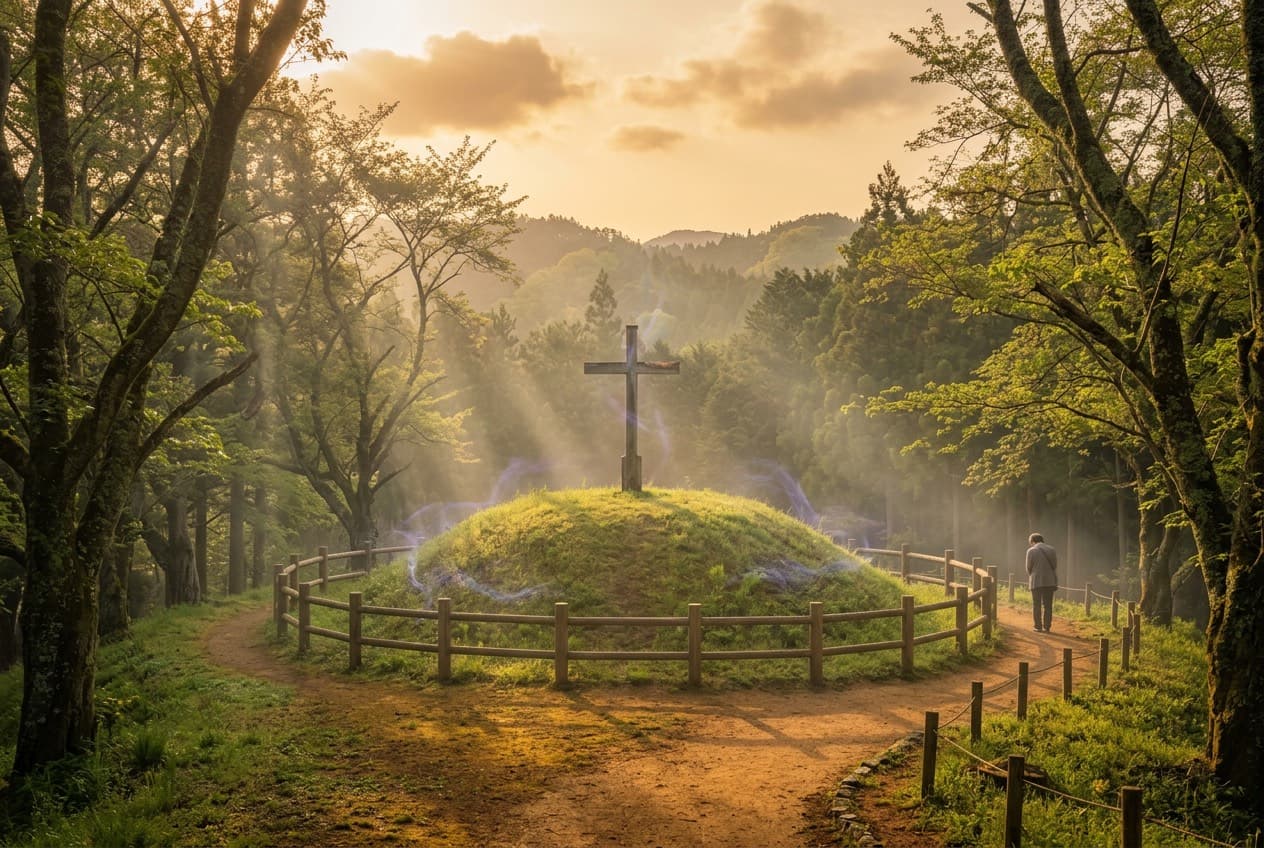
Photo: Tomb of Christ in Japan by Mccunicano · CC BY-SA 4.0 · web-optimized copy
Christ Park · 33-1 Nozuki, Herai, Shingo, Aomori
Travel Facts
Practical details last checked 2026-07-11. Hours, prices, transport, weather, and seasonal access can change. Recheck the linked official source before departure. Legend and interpretation are labeled separately from visitor facts.
What the Site Is
Christ Park is a public site in Shingo Village built around a local legend that Jesus survived the crucifixion, traveled to northern Japan, lived as a farmer, and died at age 106. A second mound is associated in the legend with his brother Isukiri.
The mounds are real landscape features. Their identification as the graves of Jesus and Isukiri is folklore, not verified burial history. Official municipal and tourism sources present the story as a legend and leave judgment to the visitor.
Official visitor information and legend framing.
Municipal account of the claim and museum details.
Where the Legend Came From
Shingo Village dates the appearance of the claim to 1935, when material associated with the Takeuchi Documents led Kiyomaro Takeuchi to identify the site. The municipality says a group later reported finding a document described as Christ's will in 1936.
Mainstream historical treatment regards the Takeuchi Documents as modern pseudohistory. The safe editorial formulation is therefore: the documents generated the Shingo legend; they do not establish an ancient journey by Jesus.
Current Visitor Information
The museum is open 9:00–17:00 when in season. Admission is ¥500 for high-school age and older and ¥300 for elementary and junior-high students. It closes Wednesdays except during summer vacation and closes for winter from early November to late April.
Amazing AOMORI lists free parking and an approximate 60-minute drive from Hachinohe Station. Festival access controls can differ from ordinary opening days, so check the current year's official or regional notice before driving to the park.
Durable regional page for festival context and updates.
Continue Reading
Explore the Mythology