The Christ Festival: How to Attend Shingo's Annual Ceremony Respectfully
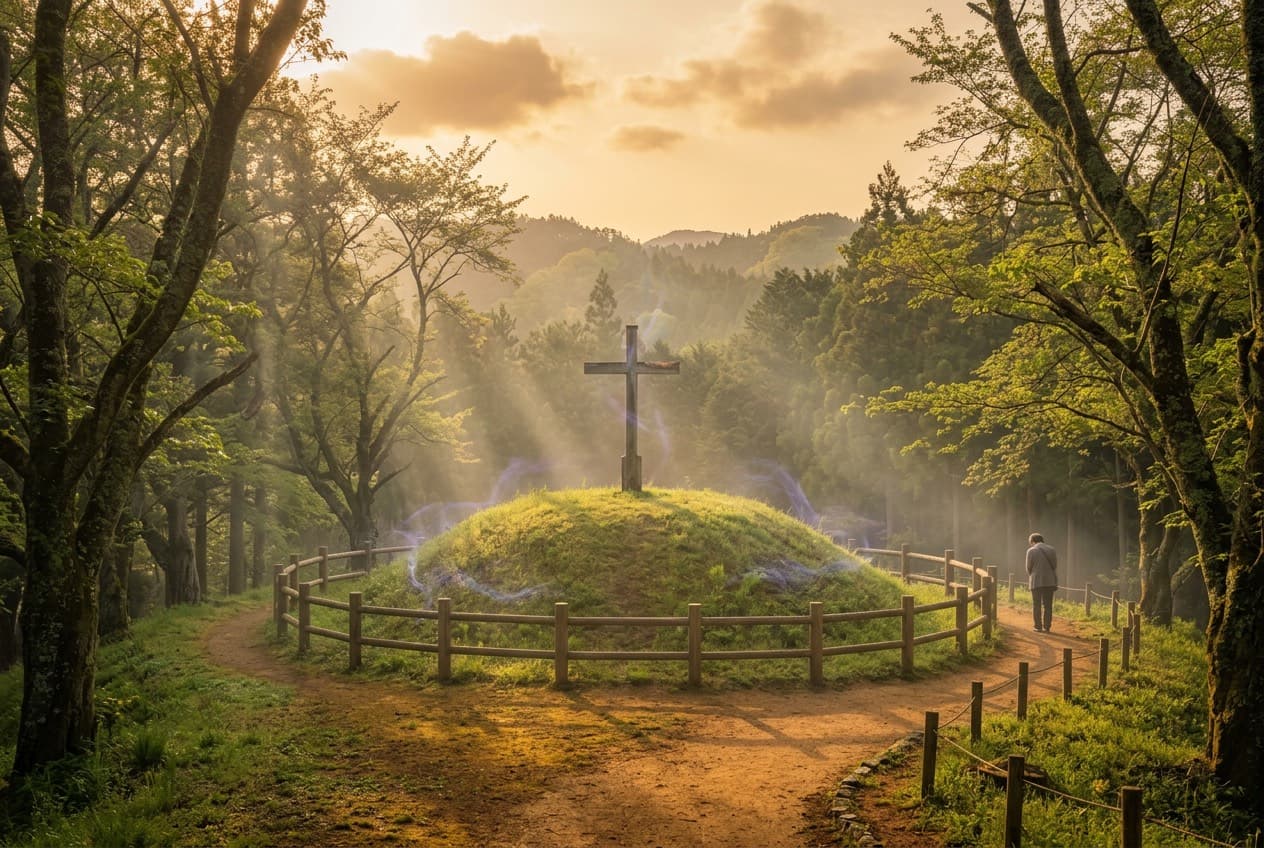
Photo: Tomb of Christ in Japan by Mccunicano · CC BY-SA 4.0 · web-optimized copy
Christ Festival venue · Christ Park, Shingo
Travel Facts
Practical details last checked 2026-07-11. Hours, prices, transport, weather, and seasonal access can change. Recheck the linked official source before departure. Legend and interpretation are labeled separately from visitor facts.
What the Festival Is
The Christ Festival is a community ceremony held at Christ Park. Official tourism sources describe tamagushi offerings, a lion dance, and a performance of Shingo's Nanyadoyara Bon dance.
Visit Hachinohe says the festival is held on the first Sunday of June. Confirm the specific year's date and program with Shingo Village rather than treating an old schedule as permanent.
Official overview of the ceremony.
Regional guide that publishes annual festival updates.
How to Attend
Treat the event as a living local ceremony, not a costume attraction. Follow photography instructions, avoid interrupting offerings or dances, and do not enter private land.
Parking, vehicle access, and shuttle arrangements can change for each edition. Check the current Shingo Village or regional festival notice before travel and follow event-day staff instructions.
Regional guide; confirm the current year's access arrangements before travel.
The Nanyadoyara Context
Nanyadoyara is not unique to the tomb. Official regional sources describe it as a Bon-dance refrain found across former Nanbu-domain areas of southern Aomori and northern Iwate. Its origin remains unsettled, with multiple folk and linguistic theories.
The alleged Hebrew reading is one theory, not scholarly consensus. Presenting that distinction makes the festival stranger and more credible at the same time.
Official regional description of the dance's distribution and competing origin theories.
Continue Reading
Explore the Mythology