Journey

Christop (キリストっぷ): The Souvenir Shop at the Jesus Tomb in Shingo Village

Open hillside terrain near the Tomb of Christ in Shingo Village, Aomori Prefecture

The Shop

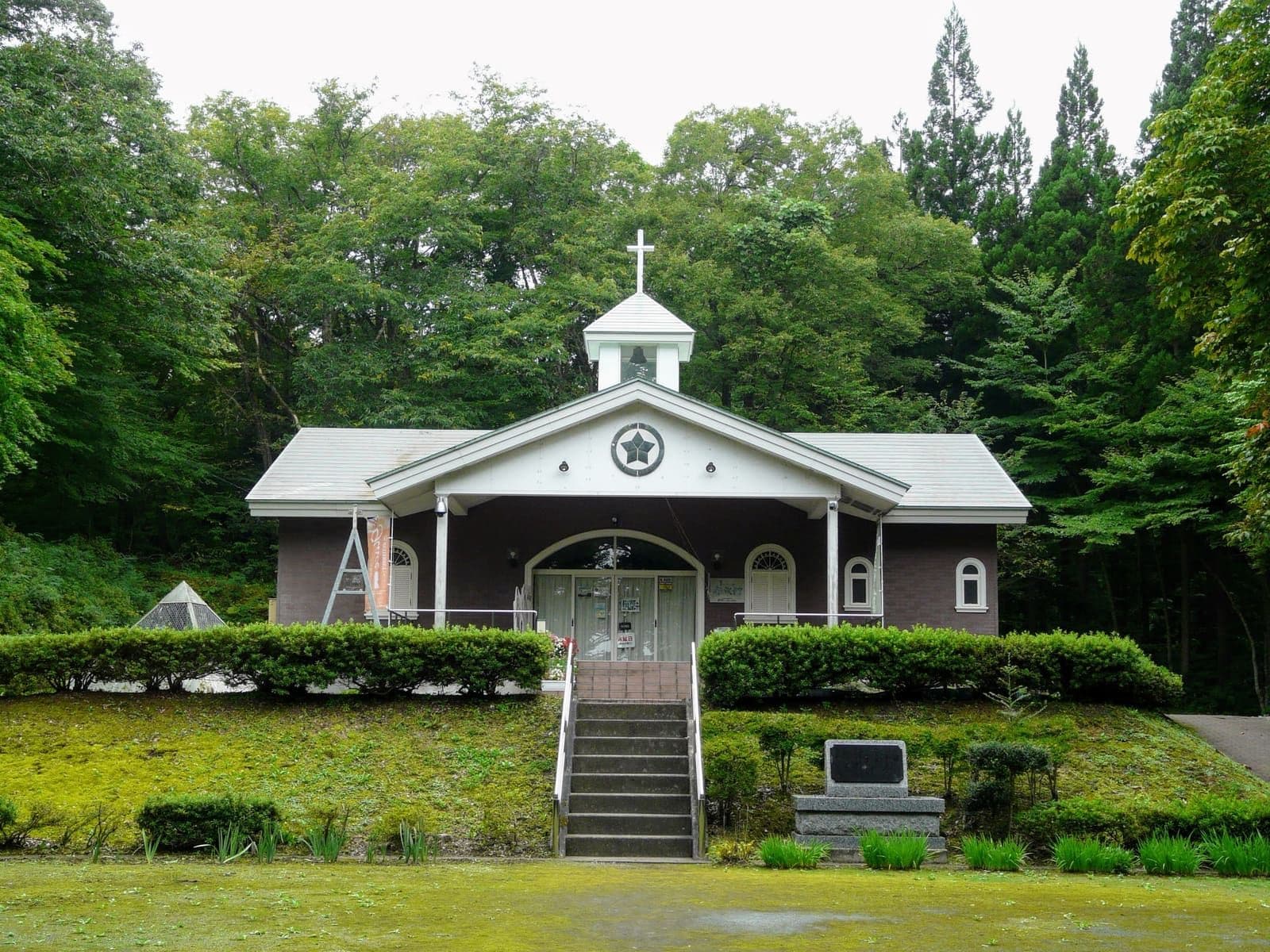
Christop (キリストっぷ) sits near the entrance of Christ Village Park in Shingo Village — a prefab structure, modest in every physical dimension, whose name condenses a theological claim and a regional convenience store into a single portmanteau. Christ plus Ministop. The kanji are not on the sign, but the logic is.

The shop is operated by local elderly volunteers as part of a village revitalization effort that began around 2012. It is not a tourist attraction in the conventional sense. It does not pretend to be. What it is, exactly, resists easy category — part folk archive, part dry goods counter, part quiet acknowledgment that something strange happened here a long time ago and people are still finding ways to live next to it.

The Sign

Before entering, read the hours sign. It is the first piece of information the shop offers, and it does more work than a hours sign should.

The text reads: 十字架(10時か)ら三時まで. Parsed literally: open from the cross until three. The kanji juujika (十字架) means crucifix — but spoken aloud against the parenthetical, it also sounds like juuji-ka, which parses as 'ten o'clock?', the rising intonation of mild uncertainty. The sign holds both readings at once. Open from the Cross (10 o'clock?) until 3.

This is not accidental. The pun is the threshold. Whoever made this sign understood that the best way to acknowledge the absurdity of the thing is to fold it directly into the operational information. The shop is open when the cross opens it. The uncertainty is built in.

Products

Hakka Ame (¥350) is the anchor product. Hakka means mint; ame means candy. But hakka also sounds like haka, the Japanese word for tomb or grave — and ame, spoken differently, lands close to Amen. The candy is called Mint Drops on every English-facing surface. What it actually is: tomb candy that ends in a prayer. The ¥350 price point makes it the most economical theological artifact in the prefecture.

Kirisuto No-Sato sake carries the village name and comes in standard ceramic vessels. Kirisuto means Christ; no-sato means village or hometown — Christ's Hometown, which is either the most audacious brand name in Japanese sake or simply a statement of local fact, depending on your prior commitments.

The shop also carries Christ manju — steamed buns stamped with the Star of David, the same six-pointed pattern that appears on the Sawaguchi family crest. The star and the bun and the stamp arrive together without explanation, which is the correct amount of explanation.

T-shirts, can badges, coasters, thermometers, and other seasonal items round out the inventory. Stock varies. What is available on any given Sunday in May will not be identical to what is available on any given Sunday in September.

Hours and Practical Information

Christop is open weekends only, spring through early autumn. Currently operating Sundays. Closed November through April — the shop shuts when the snow arrives and reopens when it recedes. The Shingo winter is not symbolic; it runs deep.

Cash only. There is no website. There is no social media presence worth citing. The shop exists on the ground in Shingo and nowhere else. If you arrive on a Tuesday in August, it will be closed. If you arrive on a Sunday in July before 10 and after 3, it will be closed. The hours window is real and worth planning around.

The Google Maps listing is the most reliable way to confirm you are looking at the right structure on the right side of the tomb park entrance.

Christop on Google Maps

Location near the Christ Village Park entrance in Shingo Village.

Nearby: Denshokan Museum

The Kirisuto no Sato Denshokan (キリストの里伝承館) — Legend of Christ Museum — sits adjacent to the tomb park. Admission is ¥200. Open 9:00 to 17:00, closed Wednesdays. The museum holds reproductions of the Takenouchi Documents, photographs of the Sawaguchi family, and exhibits tracing the legend from its 1930s emergence to its current status as Shingo's primary public identity.

The Denshokan is the factual complement to the tomb. Christop is the artifact complement. Between them, the museum and the shop trace two different relationships to the same improbable story — one archival, one commercial, both sincere.

Nearby: Ebisuya Ramen and the Christ Ramen

Ebisuya (恵比寿屋) is a ramen shop in the Shingo area that serves the Christ Ramen (キリストラーメン) at ¥580. The bowl is built around a clear broth with mountain yam (tororo), star-shaped fu (wheat gluten cut to echo the Star of David), and no pork — a detail that lands differently once you have considered the tomb's Judaic adjacencies.

The Christ Ramen is a field-note item, not a tourist spectacle. It sits on the menu next to the regular ramen. It costs ¥580. You can eat it without commentary.

What the Shop Is

Christop is the kind of place that only exists at the edge of a legend that a community has lived next to for generations. The village did not import the strangeness; the strangeness was already there in the hills, in the family crests, in the folk chants that don't parse as standard Japanese. The shop did not create a mythology. It opened a counter inside one.

The volunteers who run it are not performing irony. They are not performing reverence either. They are selling candy and sake and buns at a small structure near a grave that may or may not hold the residue of the most consequential life in the Western tradition. The sign says open from the cross until three. They are open.

Continue Reading