Journey

The Denshokan Museum: What the Village Chose to Preserve

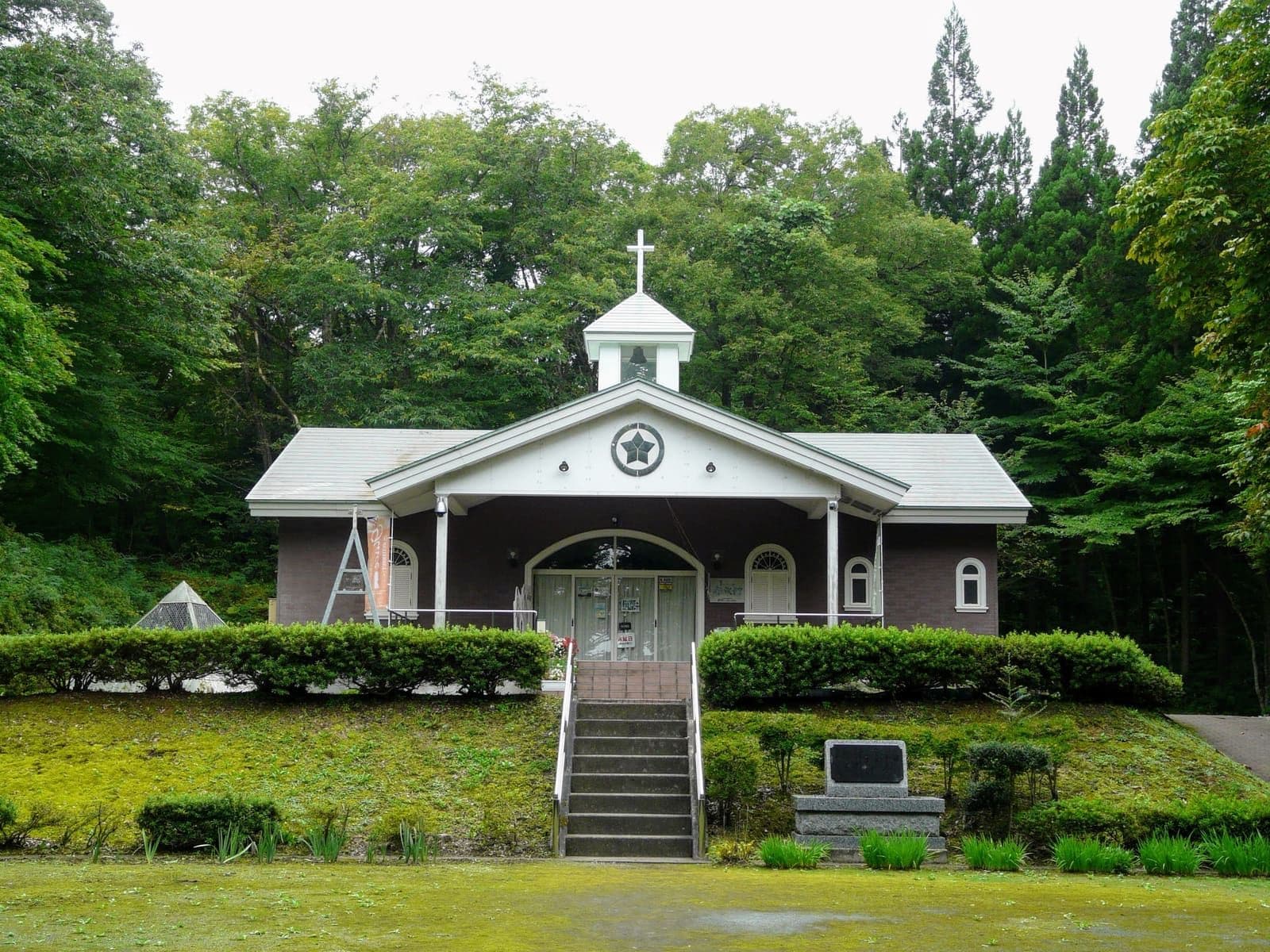
Entrance to the Denshokan Museum beside the Tomb of Christ site in Shingo Village

The Museum

The Kirisuto no Sato Denshokan (キリストの里伝承館) — the Legend of Christ Museum — sits adjacent to Christ Village Park, a few steps from the grave mounds. It is a small building. Admission is 200 yen for adults, 100 yen for children. Hours: 9:00 to 17:00. Closed Wednesdays. Closed from early November through late April — the winter shutdown is total.

The museum does not argue for or against the legend. It presents what the village has accumulated: documents, photographs, artifacts, and a structured timeline of the claim's history from its 1935 emergence to its current status as Shingo's primary public identity. The curatorial position is preservation, not advocacy.

The Will

The centerpiece exhibit is a reproduction of the document identified within the Takeuchi corpus as the Will of Isukirisu Kurisumasu — the testament of Jesus Christ. The original was reportedly destroyed in the Tokyo air raids during World War II. What survives is a copy maintained by the Sawaguchi family.

The will is written in Japanese. It is signed 'Jesus Christ, father of Christmas.' It states that Jesus came to Japan at age 21 to study, returned to Judea at 33, was rejected, escaped crucifixion when his brother Isukiri died in his place, fled back to Japan via Siberia, changed his name to Torai Tora Daitenku, married a local woman named Miyuko, fathered three daughters, and died in Herai at age 106.

The phrase 'father of Christmas' is the detail that most clearly marks the document as a modern composition rather than an ancient text. It sits in a glass case in a small museum in a village of 2,400 people. Admission is two hundred yen.

The Photograph

On the museum wall hangs a photograph of Sajiro Sawaguchi as a young man. He was the elderly patriarch of the family that has tended the grave mounds for generations. The photograph is notable for one detail: his eyes appear blue.

In 1935, nationalist historian Banzan Toya cited this feature as evidence of Christ's bloodline surviving in the Sawaguchi family. The photograph has since become one of the most reproduced images associated with the legend. It hangs in the museum without editorial commentary. The visitor is left to look at the eyes and decide what they see.

The Rest of the Collection

The museum also contains displays of traditional agricultural implements and clothing from the Herai district, exhibits on the Oishigami Pyramid and its ancient pyramid theory, material on the contested tomb of Emperor Nagayoshi (Chokei), and documentation of the Star of David patterns found on local family crests and traditional textiles.

English translations of key documents are available. A video presentation covers the region's various mystery claims. The museum treats all of this material with the same even-handed archival approach: here is what was found, here is what was claimed, here is the object. The visitor supplies the interpretation.

Visiting

The Denshokan is the factual complement to the tomb site. Where the grave mounds are atmospheric and open to weather and feeling, the museum is enclosed, lit, and organized. Together they form a complete visit: the site where the claim lives in the landscape, and the building where the claim lives in documentation.

Budget thirty to forty-five minutes. The museum is small enough to walk through in fifteen, but the will and the photograph reward slower attention.

Christ Park — Amazing AOMORI Official Guide

Official tourism entry for the Christ Park area including Denshokan museum.

Continue Reading