Field Note 01
Primary Node
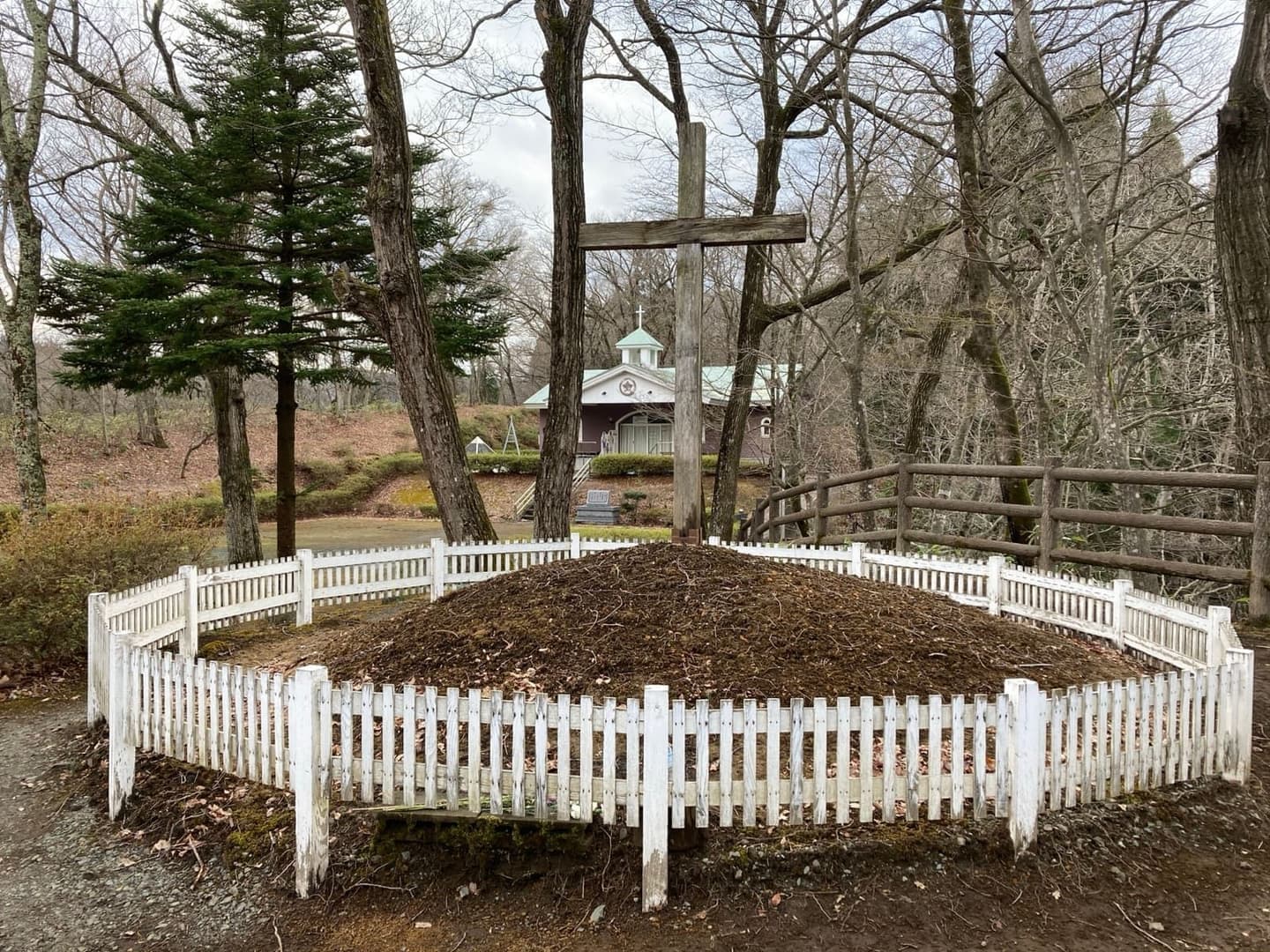
Photo: Tomb of Christ in Japan by Mccunicano · CC BY-SA 4.0 · web-optimized copy
40.46577° N, 141.17350° E
Shingo is small enough to miss if you come looking for spectacle. That is part of the mechanism. The conduit hides inside ordinary geography: fields, cedar, mountain air, and a silence that feels charged rather than empty.
Field Fact
Factual Ground
Shingo is a real municipality in Aomori Prefecture, in the Sannohe District of northern Honshu. The public-facing municipal site presents the town in ordinary administrative terms: services, notices, office functions, and baseline community information.
That matters because the place does not arrive pre-framed as an occult destination in official civic language. In practical terms, it reads as a small rural town with the usual infrastructure of local government and a limited but visible tourism profile tied to the Christ legend.
Shingo's location, governance, and municipal priorities are straightforward to verify, and those fundamentals anchor any serious reading of the town before mythic interpretation begins.
Site Context
Observed Site Conditions
On approach, the physical impression is not density but spacing: fields, roads, low structures, and enough open air to make scale feel strangely unstable. The terrain does a large share of the work. The place does not sell magnitude; it accumulates it through distance, repetition, and silence.
That makes the town unusually suited to the Conduit framing. When a location is visually modest but atmospherically persistent, it becomes easier to present it as a node where ordinary geography carries an additional reading without requiring the factual layer to become implausible.
This frame can deepen over time through sourced municipal details, transport context, and seasonal observation while keeping the language grounded.
Conduit Reading
Conduit Reading
In canon terms, the primary node works precisely because it is not spectacular. The system hides in legible civic structures. The stronger the everyday frame, the more forcefully the myth can operate beside it without needing false claims.
The strongest reading keeps both layers intact: facts define the town as it is, and the conduit lens interprets why an administratively ordinary place can still feel like a boundary condition in the story.
The primary node does not need to announce itself. It only needs to remain stable enough that the same roads, same fields, and same municipal facts keep returning, year after year, as the surface over a deeper signal.
Field Fact
This note should eventually combine real local data, place-specific references, and directly attributable context from public sources.
Field Note
Interpretive language can stay strange, but it should read as canon or editorial theory, not as a literal municipal claim.
Reference Rule
Use official Shingo and Aomori sources firstSite Conditions
Topography, weather, distance from major hubs, and seasonal shifts are part of the note, not background decoration.
Canonical Read
Each field note should interpret the landscape as conduit behavior: residue, pattern, pressure, and threshold logic.
Target Depth
Each field note should eventually expand into an 800 to 1,600 word article with local references, images, and outbound links.
Sources
Continue
Free guide
Hachinohe Station to the tomb, on one page.
A bilingual PDF with the Shinkansen to Hachinohe, the drive into Shingo, and the limited bus connection. Confirm the email, and the guide is in the message that follows.